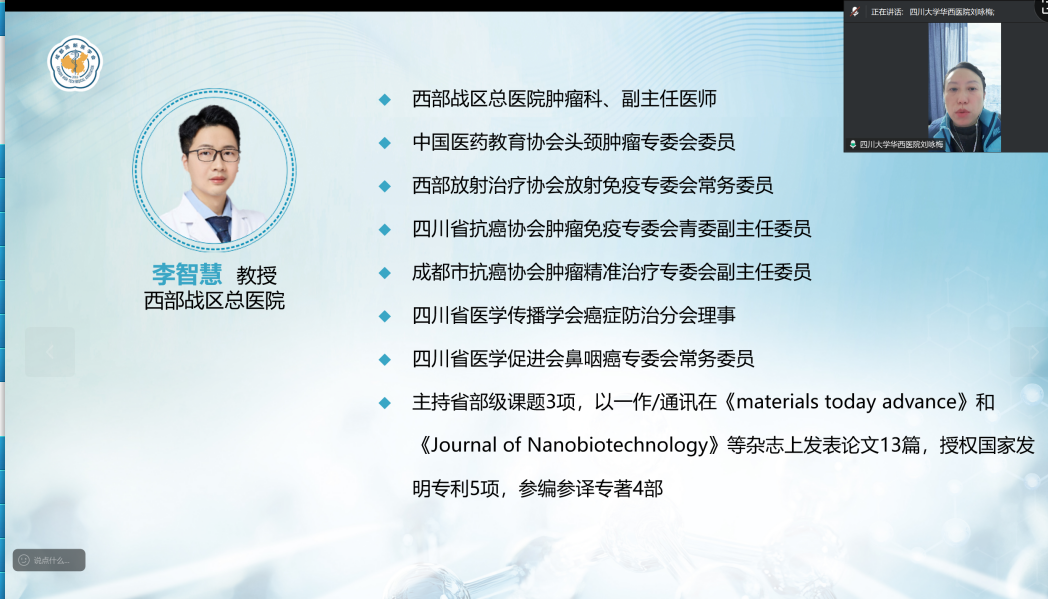
To thoroughly implement the spirit of a series of policy documents, including the "Healthy China 2030" Plan Outline, the Guiding Opinions on Promoting High-Quality Development of Public Hospitals, and the National Health Commission's Guiding Opinions on Promoting Clinical Specialty Capacity Building, and to firmly grasp the fundamental task of clinical specialty capacity building in hospital development—serving as the core foundation for patient care—the "Specialty Capacity Building Promotion Initiative" academic series, the Multidisciplinary Exchange Conference on Thoracic Oncology, organized by the Chengdu High-Tech Medical Association, was successfully held online on December 2, 2025. This conference focused on the field of thoracic oncology, aiming to inject strong momentum into helping medical institutions develop leading specialties, improve management systems, explore technological innovations, and enhance service efficiency through in-depth multidisciplinary integration and cutting-edge dialogue.
Clinical specialty capacity is the core pillar of medical service quality and safety, directly impacting the health and well-being of the people as well as their healthcare experience. At the national policy level, continuous emphasis has been placed on guiding and strengthening clinical specialty construction. The fundamental goal is to lead medical institutions at all levels in systematically improving specialty service capabilities and quality safety standards, thereby solidifying the foundation for high-quality hospital development and providing robust support for the Healthy China strategy. The "Specialty Capacity Building Promotion Initiative" academic series is precisely a high-level, practical exchange platform meticulously established by the Chengdu High-Tech Medical Association in active response to the national call. This Multidisciplinary Exchange Conference on Thoracic Oncology closely integrated current clinical practices and development needs, revolving around three core themes: "Breaking Down Barriers, Integrated Development, and Enhancing Efficiency." The conference brought together renowned domestic and regional multidisciplinary experts in thoracic oncology, including specialists in surgery, medical oncology, radiotherapy, imaging, and pathology, to jointly discuss strategies for specialty development.
The conference highlighted that promoting capacity building in thoracic oncology and other clinical specialties is a strategic project that requires persistent and systematic advancement. It demands that medical institutions place specialty development at the core, continuously improve management systems and operational mechanisms, courageously explore technological innovations under multidisciplinary integration, and firmly uphold the lifeline of medical quality and safety. The successful hosting of this exchange conference provided valuable learning and development opportunities for medical professionals specializing in thoracic oncology within Sichuan and beyond, effectively facilitating the dissemination and implementation of advanced concepts, technologies, and experiences. The Chengdu High-Tech Medical Association stated that the "Specialty Capacity Building Promotion Initiative" academic series will continue to be held, covering more critical clinical specialties in the future. It is committed to serving as a "catalyst" and "bridge" for regional specialty capacity enhancement, contributing the expertise of a professional association to continuously improve medical service capabilities, safeguard public health, and support the high-quality development of public hospitals and the Healthy China initiative.