


To advance the development of health management disciplines and establish an academic exchange platform, the “Health Management Committee 2025 Academic Conference,” jointly hosted by the Chengdu High-Tech Medical Association and the Sichuan Medical Academy·Sichuan Provincial People's Hospital, and organized by the Chengdu High-Tech Medical Association Health Management Committee, was successfully convened in Chengdu on December 5, 2025. Centered on the theme “Focusing on Weight Management Strategies to Support Primary-Level Health Management,” the conference attracted participation from committee members of the Health Management Special Committee, medical professionals specializing in weight management, and related fields across various healthcare institutions. Attendees engaged in in-depth discussions and exchanges on cutting-edge concepts, practical approaches, and interdisciplinary collaboration within health management.
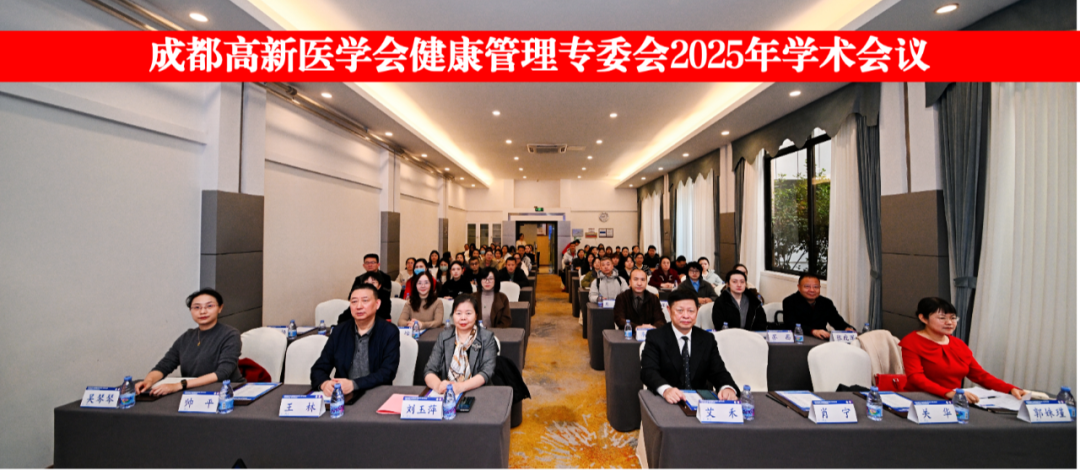
The opening ceremony was chaired by Guo Shujin, Chairperson of the Health Management Special Committee of the Chengdu High-Tech Medical Association. Keynote addresses were delivered by Ai He, Vice President and Deputy Secretary-General of the Chengdu High-Tech Medical Association, and Professor Liu Yuping, Honorary Chairperson of the Health Management Special Committee. They emphasized that the development of health management must adhere to evidence-based principles and prioritize practical application. Attendees were encouraged to translate conference insights into tangible actions that enhance professional capabilities and serve primary care settings, collectively advancing standardized disciplinary development and innovative practices.
The academic session featured in-depth discussions on weight management and grassroots health promotion, systematically exploring their pivotal roles in chronic disease prevention, health advancement, and primary care services. Multiple experts addressed weight management's positioning and implementation strategies within holistic healthcare systems, covering dimensions such as multidisciplinary collaboration, evidence-based medicine, digital intelligence applications, and health management for special populations. The conference maintained a robust academic atmosphere, with speakers generously sharing cutting-edge yet practical insights. Attendees listened intently and engaged actively. The conference not only provided valuable knowledge updates and skill references but also established an efficient cross-sector exchange and collaboration platform, effectively promoting the dissemination and integration of new health management concepts and technologies into primary care settings.
Moving forward, the Health Management Committee of the Chengdu High-Tech Medical Association will continue to serve as an academic leader and bridge, pooling greater wisdom and strength to collectively advance health management toward more scientific, systematic, and humanistic approaches.


