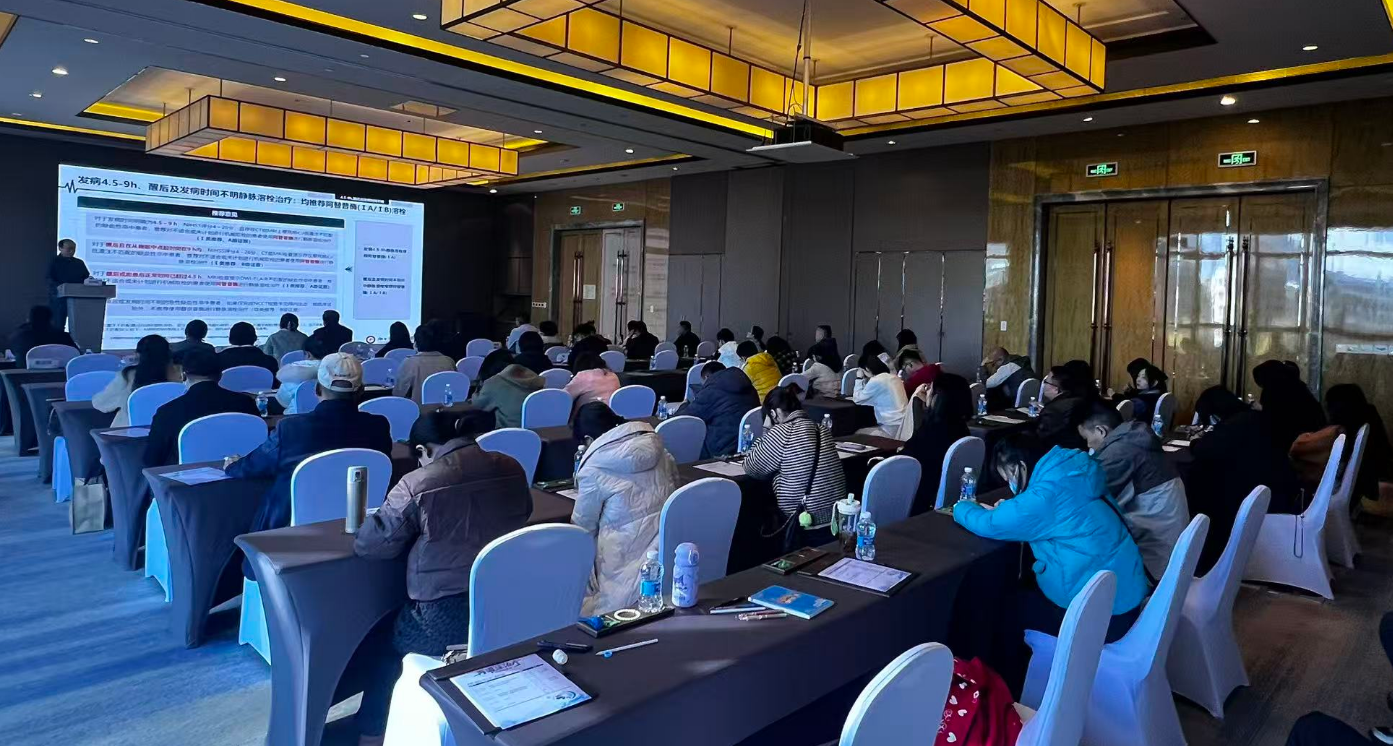
The Western Cerebrovascular Disease Reperfusion Therapy Training Course was successfully held online on November 15, 2025. Thrombolytic therapy is a critical component in the treatment of acute ischemic stroke, directly impacting patient survival rates and long-term prognosis. To enhance the clinical diagnosis and treatment capabilities of grassroots physicians for stroke, improve the diagnosis and treatment rate, elevate the comprehensive management of cerebrovascular diseases, and better serve patients, this training course was organized.
The course aimed to disseminate the most standardized treatment concepts and cutting-edge technical standards domestically to grassroots levels in western regions, bridging the "last mile" in acute stroke treatment. The training program was designed to be intensive and results-oriented. During the theoretical sessions, leading domestic experts in cerebrovascular diseases provided in-depth interpretations of the "Evolution of Intravenous Thrombolysis" and delivered specialized reports on advanced and challenging topics such as multimodal imaging assessment for patients beyond the time window, complex pathway thrombectomy techniques, perioperative management, and complication handling. The experts emphasized that establishing efficient regional collaborative treatment networks and in-hospital green channels is equally important as mastering core technical skills. In the opening remarks, it was stated: "Stroke prevention and treatment in western regions are a key component of the national stroke prevention and control system. Through this precise training model combining 'theory and practice' and 'technology and management,' we can rapidly cultivate a high-level, 'self-sustaining' stroke treatment team in the western regions. This holds profound significance for implementing the national graded diagnosis and treatment policy and safeguarding the life and health of the people."
Participants unanimously expressed that the training content was "down-to-earth, practice-oriented, and highly practical." Not only did it update their knowledge systems, but it also equipped them with immediately applicable skills. Upon returning to their respective units, they plan to promptly optimize local stroke emergency procedures, enabling more patients in western regions to receive the most effective treatment within the "golden time window." It is reported that such training courses have become a branded initiative for promoting stroke treatment technologies in western regions, continuously delivering advanced diagnosis and treatment concepts and technical expertise to the area. This contributes solid medical strength to reinforcing the western foundation of the "Healthy China" initiative. Nearly one hundred key physicians from over ten provinces, cities, and autonomous regions in western China, specializing in neurology, neurointervention, emergency medicine, and imaging, participated in this intensive theoretical and hands-on training. Stroke is the leading cause of death and disability among Chinese residents, and its treatment is highly time-dependent, as "time is brain." Reperfusion therapy, particularly intravenous thrombolysis and endovascular thrombectomy, is the fundamental approach to salvaging ischemic brain tissue and reducing disability rates.